
Mini Split & Ductless AC Installation in Phoenix, AZ
Ductless heating and cooling for homes, garages, casitas, offices, bedrooms, and additions across the Phoenix Metro. Sapper HVAC sizes the system to the space and provides a written installation scope before work begins.
Quick Answer — Ductless Mini Split Service in Phoenix Metro
Sapper HVAC offers ductless mini split installation throughout Phoenix and the Phoenix Metro. We install single-zone and multi-zone systems for garages, bedrooms, offices, casitas, additions and other spaces, with Daikin, Mitsubishi, AC Pro, Aurus and Everwell options. Veteran-owned · AZ ROC #360142.
Daikin Offer
$500 Off Qualifying Daikin Mini Split Installation
New qualifying single-zone Daikin installations through November 30, 2026.
Aurus 12K Mini Split Deal
$1,950 INSTALLED Aurus 12,000 BTU 110V Mini Split
Perfect for one-car garages, bedrooms, home offices, workshops, small additions, and other hard-to-cool spaces.
Quick Answer
A mini split is a ductless heating and cooling system that connects an outdoor unit to one or more indoor air handlers without using central ductwork. In Phoenix and the Phoenix Metro, mini splits are commonly used for garages, additions, casitas, bedrooms, offices, workshops, and zoned comfort. Sizing depends on the space, insulation, sun exposure, ceiling height, windows, garage-door exposure, and intended use. Veteran-owned. Licensed ROC #360142. Call (602) 206-7359.
Common Questions
Frequently Asked Questions
What size mini split do I need in Arizona?
Mini split sizing in Arizona depends on square footage, insulation, ceiling height, windows, sun exposure, garage-door construction, and how the space will be used. Garages often need more capacity than an insulated bedroom or office of the same size, so Sapper HVAC reviews the actual space before recommending BTU capacity.
Are mini splits good for garages in Phoenix?
Mini splits are a common garage-cooling option in Phoenix because they do not require extending the home's ductwork and provide independent temperature control. Many two-car garages require 18,000 to 24,000 BTU depending on insulation, door exposure, ceiling height, and intended use; fully insulated garages may size lower.
How much does a mini split cost installed in Phoenix?
Many single-zone mini split installations in the Phoenix Metro fall around $2,500 to $5,500 or more depending on BTU size, equipment tier, electrical requirements, line-set length, mounting, condensate handling, access, and other job conditions. Multi-zone projects cost more. Sapper HVAC provides written estimates before installation.
What is SEER2 and why does it matter in Arizona?
SEER2 (Seasonal Energy Efficiency Ratio 2) measures how efficiently an air conditioner converts electricity into cooling. In Arizona, where systems run 6–8 months per year at full load, a higher SEER2 rating translates to meaningful monthly savings. The federal minimum for new systems in the Southwest is 15.2 SEER2. Sapper HVAC recommends 18–25 SEER2 inverter systems for Arizona homeowners who prioritize long-term energy savings.
Do mini splits qualify for rebates or tax credits in Arizona?
Federal 25C expired for new installations after Dec. 31, 2025. SRP and APS utility rebates may also apply if the system meets current efficiency thresholds. Eligibility depends on your utility, equipment model, and current program rules. Sapper HVAC checks rebate eligibility before installation.
Is a 12,000 BTU mini split enough for a two-car garage in Phoenix?
A 12,000 BTU mini split can be appropriate for smaller or well-insulated spaces, but many Phoenix-area two-car garages need 18,000 to 24,000 BTU depending on insulation, garage-door exposure, ceiling height, sun load, and whether the space is used as a gym or workshop. Sapper HVAC reviews the actual garage before recommending capacity.
Who installs mini splits in the Phoenix Metro?
Sapper HVAC installs ductless mini split systems across the Phoenix Metro, including Chandler, Mesa, Gilbert, Tempe, Scottsdale, Phoenix, Glendale, Peoria, Surprise, Goodyear, Avondale, Buckeye, Queen Creek, San Tan Valley, Maricopa, Casa Grande, and surrounding cities. Veteran-owned. Licensed ROC #360142. Call (602) 206-7359 for a free estimate.
Mini Split Installation Cost in Phoenix — 2026 Guide
Prices below reflect typical installed costs in the Phoenix Metro, including equipment, labor, line sets, electrical, and permits. Every home and installation is different — these are planning ranges, not final quotes.
| Service / Item | Low | High |
|---|---|---|
| Single-Zone Mini Split (9,000–12,000 BTU) | $2,500 | $4,000+ |
| Single-Zone Mini Split (18,000 BTU) | $2,800 | $4,500+ |
| Single-Zone Mini Split (24,000 BTU) | $3,000 | $5,500+ |
| Multi-Zone System (2–4 heads) | $5,000 | $12,000+ |
| Additional Electrical / Long Runs | Site-specific | Quoted |
| Permits | When required | Quoted |
What's Included in Every Quote
- 1In-person or virtual site evaluation and load assessment
- 2Equipment recommendation based on space size, sun exposure, and insulation
- 3Itemized quote with equipment, labor, electrical, permits, and line sets
- 4Permit coordination when required by the jurisdiction and project
- 5Installation scheduled based on equipment availability and project scope
- 6Full system commissioning, startup, and homeowner walkthrough
- 7Final inspection coordination when required
Prices are estimates for planning purposes only. Final pricing depends on site conditions, electrical panel capacity, line set routing, and current equipment costs. Sapper HVAC provides free, itemized written estimates.
Get My Free Mini Split EstimateMini Split vs. Central AC — Which Is Right for Your Phoenix Home?
The right system depends on your home's layout, existing ductwork, and cooling goals. Here's a direct comparison to help you decide.
| Feature | Mini Split | Central AC |
|---|---|---|
| Requires Ductwork | No | Yes (existing or new) |
| Installation Time | 1 day | 1–3 days |
| Zone Control | Each room independent | Single thermostat (or smart zoning) |
| Best Use Case | Garage, addition, specific rooms | Whole home with existing ducts |
| Typical Cost Range | $2,500–$5,500 or more for single-zone | Varies by system and installation scope |
| Energy Efficiency | Very high (18–25 SEER2) | High (15–20 SEER2) |
| Rebate Eligible | Utility programs only; 25C expired | Utility programs only; 25C expired |
| Heating Capable | Yes (heat pump) | Yes (heat pump or gas) |
Best For: Mini Split
- Garages, workshops, and casitas
- Room additions with no ducts
- Homes where only specific rooms need cooling
- Spaces requiring independent temperature control
- Homeowners prioritizing maximum energy efficiency
Best For: Central AC
- Whole-home replacement with existing ductwork
- Homes where all rooms need simultaneous cooling
- Situations where a single thermostat is preferred
- Larger homes where duct capacity is already in place
Expert Verdict
In Phoenix, mini splits are often a strong fit for garages, additions, casitas, offices, and spaces without ducts. For whole-home replacement, central AC or a ducted heat pump may make more sense when usable ductwork is already in place. Sapper HVAC can compare both options for the property.
What Is a Mini Split System?
A mini split — also called a ductless AC or ductless heat pump — is a two-part cooling and heating system that works without traditional ductwork. It connects an indoor air handler to an outdoor condenser via a small conduit containing refrigerant lines and electrical wiring.
Modern mini splits use inverter-driven compressors and achieve SEER ratings of 20–30+, making them significantly more efficient than window units or older central AC systems. They provide precise, zoned temperature control and can both cool and heat — ideal for Arizona's year-round climate demands.
← Back to Sapper HVAC Home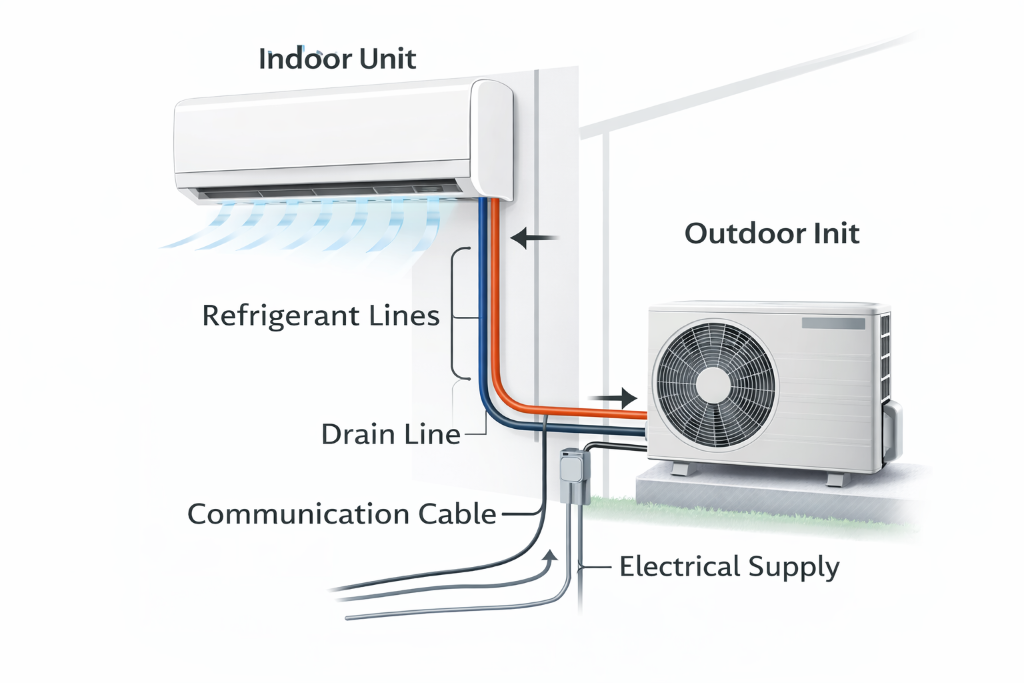
Indoor Air Handler
Mounted high on the wall, the air handler quietly distributes conditioned air directly into your space — no ductwork required.
Outdoor Condenser
The compact outdoor unit handles the heat exchange process, expelling heat outside while sending cool refrigerant indoors.
Inverter Technology
Unlike traditional systems that cycle on and off, inverter-driven compressors ramp up and down to maintain precise temperatures, saving energy.
Zoned Comfort
Each indoor unit controls one zone independently. Cool the rooms you use without wasting energy on empty spaces.
Why Mini Splits Work So Well in Arizona
The combination of extreme heat, long cooling seasons, and older homes with inadequate ductwork makes the Phoenix Metro one of the best markets in the country for ductless mini split systems.
Built for Extreme Heat
Phoenix summers regularly exceed 110°F. Quality mini splits from brands like Daikin are rated to operate efficiently at high ambient temperatures, unlike systems that struggle or shut down in the heat.
Superior Energy Efficiency
Mini splits with SEER ratings of 20–28 can cut cooling costs significantly compared to older central systems. Less energy consumed means lower monthly utility bills — a real advantage in Phoenix's long cooling season.
No Duct Loss
Traditional ducted systems can lose 20–30% of conditioned air through leaky or uninsulated ducts. Mini splits deliver cooling directly to the room, eliminating that waste entirely.
Perfect for Garages, Casitas & Additions
Rooms without existing ductwork — garages, guest houses, room additions, sunrooms — are ideal candidates for mini splits. No invasive duct work means cleaner, faster, more affordable installation.
Zoned Cooling Lowers Bills
Only cool the spaces you're using. Multi-zone systems let each room operate independently, so you're not wasting energy cooling an empty bedroom or guest room.
Compare Systems
Not sure which system is right?
Compare mini splits with central AC and package systems to find the best fit for your home.
Garage Cooling Expertise
Cooling a Phoenix Garage — What Actually Works
A Phoenix garage in July can reach 130°F by mid-afternoon. The combination of no insulation in the walls, a metal roll-up door absorbing direct sun, and no airflow creates a heat sink that bleeds into the adjacent house — raising cooling loads in rooms that share a wall with the garage.
Portable AC units and window units are generally ineffective in Phoenix garages because they can't overcome the heat load, quickly reach their high-temperature operating limits, and require venting hot air to a space that's already superheated.
A dedicated mini split is the standard solution for Phoenix garages because it's rated for high ambient temperatures, delivers cooling capacity proportional to the actual heat load, and operates efficiently for the garage's specific use case.
Key Facts
- Typical 2-car garage heat load in Phoenix: 12,000–18,000 BTU
- Mini split systems rated for 115°F+ ambient operation
- No vent required — all heat rejection happens at the outdoor unit
- West-facing garages or metal roofs: size up to 18,000–24,000 BTU
- Install includes dedicated 240V circuit — all-in-one job with Sapper HVAC
- Most garage installs completed in one day

Garage Mini Split Installation in Phoenix
An enclosed Phoenix garage can reach 140°F in the summer. Whether you use it as a workshop, gym, storage room, or just want to keep your car cool, a properly sized mini split is the most effective and energy-efficient garage AC solution available.
The best mini split for a garage in Arizona depends on several factors. Sapper HVAC evaluates each installation individually to ensure you get a system that actually handles the load — not just the minimum spec.
Proper Sizing Is Critical
Garages have poor insulation, no attic buffer, and direct sun exposure. In Phoenix, this means most garages need a unit sized 1–2 BTU classes larger than typical room calculations suggest.
High-Temp Rated Equipment
We install systems rated for the extreme Arizona heat. A unit that isn't built for high ambient temperatures will underperform or fail prematurely in Phoenix summers.
Dedicated Electrical Circuit
Every garage mini split installation requires a dedicated circuit. We handle the electrical work as part of the installation — no subcontracting, no surprises.
Arizona Climate Expertise
Why Phoenix Heat Changes Everything About HVAC
Phoenix summers regularly exceed 115°F — ambient temperatures that push air conditioning systems to their absolute limits. Most HVAC performance specs are rated at 95°F ambient. When it's 110°F at your outdoor unit, capacity drops and efficiency falls significantly.
Sapper HVAC sizes every system for Phoenix's actual conditions — not national averages. That means using 25 BTU/sq ft for most Phoenix spaces (vs. the national 20 BTU standard), accounting for direct west/south sun exposure, uninsulated walls and roofs, and the fact that Phoenix systems run at near-full load for 6–8 months per year.
The result: systems that are properly sized, don't short-cycle in spring and fall, and don't fail under load in August.
Key Facts
- Phoenix design temperature: 112°F (ASHRAE cooling design day)
- Systems run 6–8 months/year vs. 3–4 months in northern climates
- Compressor and capacitor failure rates are 2–3× higher in Phoenix than national averages
- Manual J load calculations are essential — rules of thumb consistently undersize
- West- and south-facing exposure adds 10–25% to effective cooling load
Our Mini Split Installation Process
Every Sapper HVAC installation follows a structured, professional process from start to finish. We don't cut corners — because in Phoenix's climate, a poorly installed mini split is worse than no mini split at all.
Load Calculation
We calculate the exact cooling load for your space using Manual J methodology — square footage, insulation, ceiling height, sun exposure, and local climate data all factor in. No guessing.
System Sizing & Selection
Based on the load calculation, we recommend the right BTU capacity and SEER rating for your needs and budget. We only install systems suited for Phoenix's extreme heat.
Electrical Run
A dedicated circuit is installed or verified to handle the mini split's power requirements. Proper electrical work is non-negotiable for safe, reliable operation.
Mounting & Line Set
The indoor air handler is mounted at the correct height and angle. The outdoor condenser is placed on a level pad. Refrigerant lines are run through the wall and covered with line-set covers for a clean finish.
Vacuum & Refrigerant Charge
The refrigerant lines are evacuated to remove air and moisture before charging with the correct refrigerant type and quantity. This step is critical for efficiency and equipment longevity.
Startup & System Testing
We power up the system, verify correct operation in both cooling and heating modes, test the remote and controls, and confirm proper drainage before we leave.
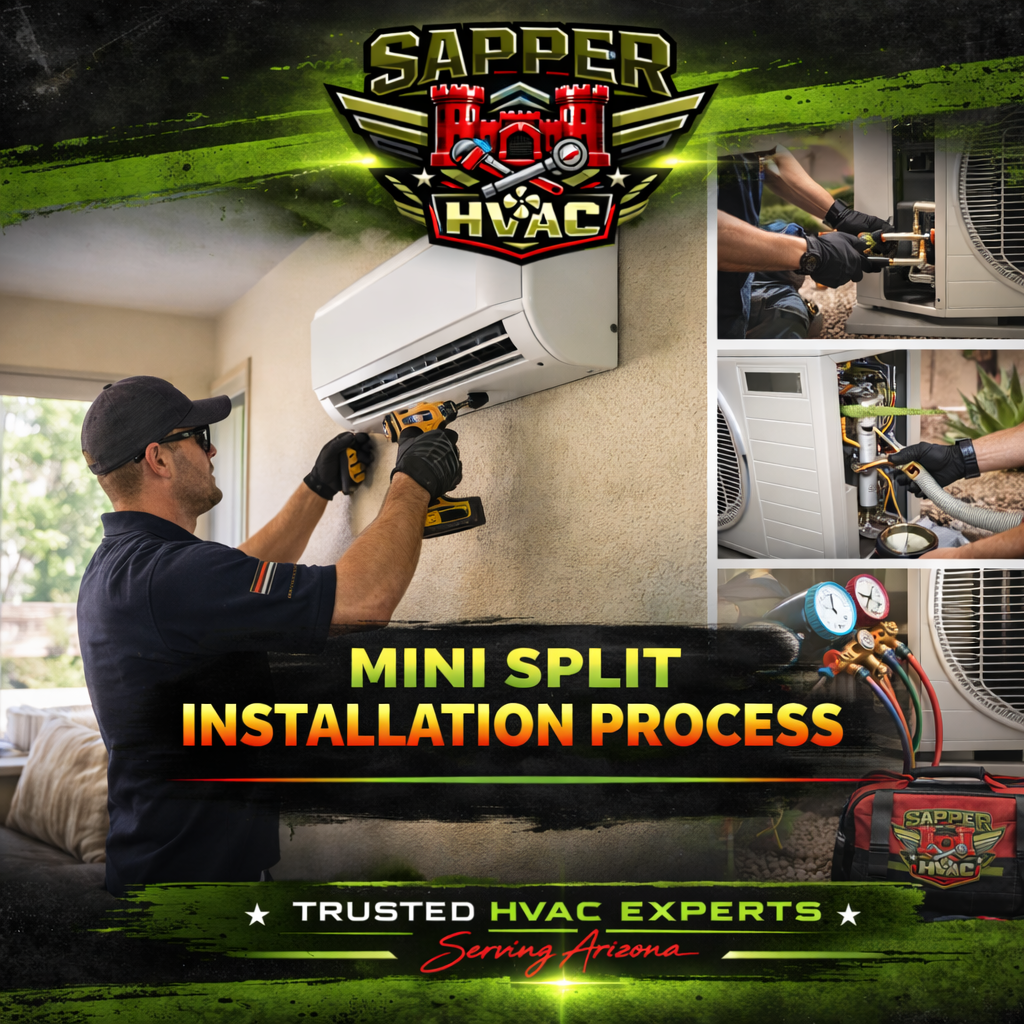
Most installations completed in one day.
Single-zone systems typically take 4–8 hours. Multi-zone systems may require two days depending on electrical and line-set complexity.
Before & After
Mini Split Brands We Install
We only install equipment we trust to perform reliably in Phoenix's extreme heat. Brand selection is matched to your specific application and budget.
Daikin
Most RecommendedWorld's leading HVAC manufacturer. Daikin mini splits are known for extreme reliability, high SEER ratings (up to 28+), and outstanding performance in hot climates. Sapper HVAC is a Daikin mini split installer serving Phoenix Metro.
TCL
Best ValueTCL offers high-efficiency ductless AC systems at competitive price points. Their inverter-driven mini splits deliver strong performance and are an excellent value option for budget-conscious homeowners.
Other High-Efficiency Systems
Case-by-CaseWe work with additional brands based on application requirements, budget, and availability. All systems we install meet our minimum efficiency and reliability standards for Arizona's demanding climate.
Want to compare systems?
Browse our service pages or contact us to discuss which brand is best for your project.
How Much Does Mini Split Installation Cost in Phoenix?
Mini split installation costs in Phoenix vary based on system size, electrical requirements, and installation complexity. There is no one-size-fits-all number — which is why Sapper HVAC provides a detailed, transparent quote before any work begins.
We don't believe in bait-and-switch pricing. Every quote includes equipment, labor, electrical work, permits, and a full startup. No surprise line items after the fact.
Get a Transparent QuoteBTU Size & Capacity
Larger spaces and Phoenix's extreme heat typically require larger systems. More capacity means a higher equipment cost. Proper sizing avoids both under-cooling and energy waste.
Electrical Requirements
If a dedicated circuit doesn't already exist, one must be installed. Panel capacity, distance from the panel to the unit, and local permit requirements all affect electrical costs.
Line Set Length
Longer refrigerant line runs between the indoor and outdoor units require more materials and labor. Difficult routing through walls or ceilings also increases installation time.
Permit Requirements
Mini split installations in Arizona typically require a mechanical permit and, when electrical work is involved, an electrical permit. Sapper HVAC handles permit acquisition as part of your installation.
Tax Credits & Rebates
Federal 25C expired for new installations after Dec. 31, 2025. Arizona utility rebates may also apply. Ask us for details when you request your quote.
Energy Efficiency Expertise
HVAC Energy Efficiency in Phoenix — What the Numbers Mean
SEER2 (Seasonal Energy Efficiency Ratio 2) measures how much cooling a system delivers per unit of electricity consumed over an entire season. The higher the SEER2, the less you spend per month on electricity. In Phoenix — where systems run 6–8 months per year — the efficiency difference between a 15 SEER2 and a 20 SEER2 system translates to meaningful monthly savings.
The federal 25C energy-efficient home improvement tax credit expired for new installations after Dec. 31, 2025. APS and SRP also offer utility rebates for qualifying high-efficiency systems.
Variable-speed inverter systems — like the Daikin and Aurus lines Sapper HVAC installs — modulate compressor speed continuously. They use only the energy needed at any given moment, rather than cycling fully on and off. In Phoenix's long cooling season, that efficiency difference compounds significantly.
Key Facts
- Federal 25C credit: expired for new installations after Dec. 31, 2025
- Rebate programs change by program and equipment, call Sapper HVAC at (602) 206-7359 to check current programs
- SRP rebate: varies by efficiency tier and system type
- 20 SEER2 vs. 15 SEER2: roughly 25% less electricity for the same cooling
- Inverter systems reduce peak demand — relevant if on time-of-use rate plan
What Makes Mini Split Installation Unique in Arizona
The Phoenix Metro presents HVAC challenges most of the country never encounters. Understanding these factors is the difference between a system that performs for 20 years and one that fails in year 5.
Extreme Summer Heat (110°F+)
Phoenix averages over 100 days above 100°F annually. Inferior mini split brands or undersized systems shut down on high-ambient lockout — leaving you without cooling when you need it most. Quality inverter-driven systems from brands like Daikin are rated to operate at 115°F+ ambient without shutting down.
West-Facing Rooms & Garage Heat Loads
West-facing rooms and garages in Phoenix can be 20–30°F hotter than east-facing spaces by mid-afternoon. Standard load calculators underestimate these loads. Sapper HVAC accounts for orientation, glass area, and insulation when sizing every system — not just square footage.
High Summer Energy Bills
A Phoenix homeowner running a 15-year-old 10 SEER system could be spending 40–60% more on cooling than necessary. Upgrading to a 20+ SEER2 mini split for a garage or zone delivers real measurable savings every month — especially with APS and SRP rates during peak summer hours.
Monsoon Season Strain
Arizona's July–September monsoon season adds humidity, dust, and storm voltage fluctuations that stress HVAC equipment. Proper installation with sealed line sets and surge protection extends system life and prevents moisture intrusion that can damage electronics.
Signs Your Phoenix Home Needs a Mini Split
- A room that's consistently 5–10°F hotter than the rest of the house
- Garage temperatures above 100°F even when the main AC is running
- A casita, guest room, or home office with no existing ductwork
- You've added a room addition or converted a space that isn't tied into central AC
- High summer utility bills from running window units or portable coolers inefficiently
- Your existing mini split is 15+ years old and losing cooling capacity
- You want independent temperature control for a specific space without affecting the whole home
Mini Split vs. Central AC vs. Package Unit
| Factor | Mini Split | Central AC | Package Unit |
|---|---|---|---|
| Ductwork Required? | No | Yes | Yes |
| Best for Garages / Casitas? | ✓ Ideal | Not practical | Not practical |
| Zoned Temperature Control? | ✓ Per room | Whole home only | Whole home only |
| Typical SEER2 Range | 18–28+ | 14–18 | 14–16 |
| Installation Disruption | Low — 4–8 hrs | Medium — 1 day | Medium — 1 day |
| Works Without Ducts? | ✓ Yes | Requires ducts | Requires ducts |
| Avg. Lifespan (Phoenix) | 15–20 yrs | 12–18 yrs | 12–18 yrs |
Averages — actual specs vary by brand, model, and installation conditions.
How Much Can a Mini Split Save on Your Arizona Energy Bill?
In Phoenix, where cooling accounts for 50–60% of annual electricity costs, system efficiency translates directly to monthly dollars. A homeowner running a window unit in a garage pays dramatically more per BTU of cooling than one running a properly sized inverter mini split.
Replacing a 10 SEER window unit with a 20 SEER2 mini split for a 500 sq ft garage can reduce that zone's cooling cost by 40–50%. At APS summer peak rates, that's meaningful savings on a 7–8 month cooling season. Federal 25C expired after 2025. Current utility rebates may apply; SRP Cool Cash is $225 per ton on qualified units.
40–50%
Potential cooling cost reduction vs. window units
20–28
SEER2 range for quality mini splits
Expired
Federal 25C ended after 2025
15–20 yrs
Expected lifespan with proper maintenance
Mini Split Maintenance in Arizona — What to Expect
Arizona's dust, heat, and long run cycles make maintenance more important here than in most climates. A properly maintained mini split in Phoenix will last 15–20 years. A neglected one may fail in 7–10.
| Maintenance Task | Frequency |
|---|---|
| Clean or replace indoor air filters | Monthly during cooling season |
| Clear debris from outdoor condenser fins | Monthly |
| Check condensate drain line for blockages | Every 3 months |
| Inspect refrigerant line set insulation | Annually |
| Professional system check & coil cleaning | Annually (pre-summer) |
| Verify electrical connections and capacitor condition | Annually |
Why Phoenix Homeowners Choose Sapper HVAC for Mini Split Installation
Veteran-owned company founded on military accountability and precision — no shortcuts, no upsells, no games.
Manual J load calculation on every job — we size your system correctly, not by square footage alone.
2-year labor warranty on every installation. Daikin systems include 12-year manufacturer parts warranty when registered.
Licensed under Arizona ROC #360142, bonded and insured. Verify our license at azroc.gov.
Ready to Get Started?
Get a Free Mini Split Installation Quote
We'll assess your space, confirm sizing with a proper load calculation, and provide a transparent, itemized quote. No obligation. No pressure. Serving all Phoenix Metro cities.
Ductless Mini Split Installation Across the Phoenix Metro
This page is the Phoenix Metro mini split installation hub. For city-specific service, use the dedicated pages for Phoenix, Tempe, Mesa, Chandler, Gilbert, Scottsdale, Glendale, Peoria, Surprise, and Queen Creek.
Sapper HVAC installs ductless systems for garages, casitas, bedrooms, offices, additions, workshops, and other spaces that need independent heating and cooling.
Mini Split Installation by City
Need service in another Phoenix Metro community?
Call (602) 206-7359 or request an estimate and we will confirm service availability for your address.
Request a Mini Split Estimate →Mini Split Installation in San Tan Valley, Arizona
Sapper HVAC is your trusted partner for professional ductless AC installation in San Tan Valley and the southern Phoenix Metro. We understand the unique cooling challenges of this fast-growing community and deliver expert solutions tailored to San Tan Valley homes.
Why San Tan Valley Homeowners Choose Mini Splits
San Tan Valley has experienced rapid growth over the past decade, with new construction and renovations creating high demand for efficient cooling solutions. Many San Tan Valley homes—especially newer builds—feature open floor plans and high ceilings that are ideal for mini split systems but challenging for traditional ducted air conditioning.
Mini split installation in San Tan Valley offers San Tan Valley residents several advantages over central AC:
- No ductwork required — Perfect for additions, garages, bonus rooms, or homes with existing duct problems
- Zone-based cooling — Cool specific rooms or areas independently, saving energy where it matters
- High efficiency in Arizona heat — Modern mini splits deliver excellent cooling at extreme temperatures (110–115°F+)
- Lower electricity bills — Inverter-driven compressors use significantly less energy than traditional AC systems
Whether you're building new in San Tan Valley or retrofitting an existing home, Sapper HVAC has the expertise to design and install the perfect mini split solution for your cooling needs.
Learn More About Mini Split Installation[IMAGE PLACEHOLDER]
mini-split-installation-san-tan-valley-home.jpg
ALT: Professional mini split indoor and outdoor units installed on modern San Tan Valley Arizona home
Professional Mini Split Services for San Tan Valley
Load Calculations & Sizing
We perform accurate load calculations for your San Tan Valley home, accounting for square footage, ceiling height, insulation quality, window exposure, and Arizona's intense solar heat gain. This ensures your mini split system is perfectly sized for comfort and efficiency.
Installation Quality
Sapper HVAC follows industry-leading installation standards: proper vacuum procedures, precision refrigerant charging, correctly insulated line sets, and secure outdoor unit placement. In San Tan Valley's intense heat, proper installation is critical for long-term reliability.
Brand Selection for San Tan Valley
We install industry-leading brands like Daikin, TCL, Everwell, and others—all engineered to perform reliably in Arizona's desert climate. Each brand offers different features and price points to match your budget and cooling priorities.
Ready for Mini Split Installation in San Tan Valley?
Contact Sapper HVAC today for a free consultation and professional load calculation. We'll help you choose the right mini split system for your San Tan Valley home.
Call (602) 206-7359Customer Feedback
Read Current Sapper HVAC Reviews
Customer feedback should be verifiable. Read current reviews on our website or directly on our Google Business Profile.
Ready for same-day HVAC service?
Veteran-owned · AZ ROC Licensed · Upfront Pricing · No Surprises
Mini Split Installation — Common Questions
Answers to the most common questions we hear from Phoenix homeowners considering a mini split system.
Many single-zone mini split installations in the Phoenix Metro fall around $2,500–$5,500+ depending on BTU size, equipment tier, electrical requirements, line-set length, mounting, condensate handling, access, and other job conditions. Multi-zone projects cost more. Sapper HVAC provides written estimates before installation.
Many straightforward single-zone mini split installations can be completed in one visit. Multi-zone systems, longer line sets, electrical work, access issues, or permit requirements can extend the schedule. Sapper HVAC provides an expected timeline with the written estimate.
Mini splits can be a strong fit for Arizona when the equipment is selected for the application and outdoor conditions. They are especially useful for garages, casitas, additions, offices, bedrooms, and spaces where extending central ductwork is impractical.
Mini splits are a common way to condition Phoenix-area garages because they do not require extending the home's central ductwork. Capacity still depends on insulation, garage-door construction, sun exposure, ceiling height, and how the space will be used, so sizing should be based on the actual garage.
Sapper HVAC provides its standard labor warranty according to the equipment and estimate you select. Manufacturer warranty terms vary by brand, model, and registration requirements, and we explain the applicable warranty before installation.
The right mini split brand depends on the application, budget, efficiency target, warranty terms, capacity, controls, and product availability. Sapper HVAC installs several equipment options and can compare them for the specific space rather than treating one brand as the best fit for every project.
Sizing depends on square footage, insulation quality, ceiling height, windows, sun exposure, garage-door construction, and intended use. Garages and poorly insulated spaces can require more capacity than an insulated bedroom or office of the same size, so Sapper HVAC reviews the actual space before recommending equipment.
Mini split service life varies by equipment, installation quality, maintenance, operating conditions, usage, and environment. Correct commissioning, clean filters, routine maintenance, and keeping the outdoor coil clear all help protect long-term performance.
Utility incentive eligibility depends on the utility, equipment model, efficiency, installation type, documentation, and current program rules. Incentive programs can change, so check the current rebate information for the equipment being quoted before making a purchase decision.
Yes. Financing options may be available to qualified customers for eligible mini split installation projects. Approval, rates, terms, down payment requirements, and monthly payments are determined by the lender.
Get a Mini Split Installation Quote Today
Fill out the form and a Sapper HVAC representative will reach out within one business day with a transparent, no-obligation estimate for your Phoenix Metro home or garage.